


Tess Mitchner Asinjo
Bay Area '98
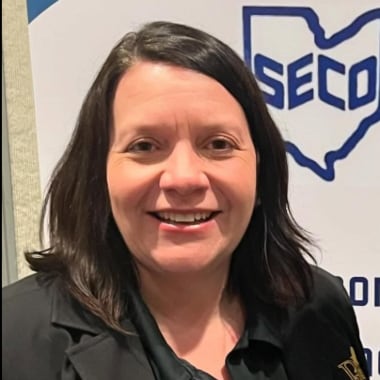
Tess Mitchner Asinjo shares how her career path was completely transformed by her time in the corps, and why she's committed to serving communities in Ohio.
Q&A
How has your time in the corps influenced your career trajectory?
Since 1998, I have served as a teacher, teacher coach, principal, vice president for a charter school network, and district administrator.
In undergrad, I was an anthropology major and an African Studies minor. I firmly believe that if it weren’t for Teach For America, I would not be in education—let alone school leadership. My time coaching TFA corps members developed my passion for teacher effectiveness and helped me develop my vision for a positive school culture. The training I received through TFA significantly impacted my professional development. My time on the TFA staff was where I learned project management and team leadership skills. I still use the same project plan template and weekly action plan template that I started using in 2003.
What brought you back to Ohio?
I am originally from Dayton, Ohio, and left for college and graduate school. After 20 years, I returned to Dayton to be closer to my family. After working nationally as director of recruitment for a charter school network, flying weekly and impacting schools outside of Ohio. I knew there were significant needs in Dayton, and I wanted to impact the students where I lived while maintaining a work-life balance. I am now just a few minutes away from my school, and I love it!
How have you leveraged the TFA network throughout your career, and what opportunities have made the most significant impact?
In so many ways! My connection with TFA alums has had a significant impact on my career trajectory. After my time in the corps in the Bay Area, I decided to move back to the Midwest and relocate to Chicago. I did not know much about the schools in Chicago, so I contacted a TFA alum to ask for input on the district schools and charter schools. She directed me to an innovative charter school, where I accepted a position.
While teaching in Chicago, I was connected with the TFA alumni group and volunteered to help with new teacher orientation and appreciation events. As a result, I got to know the TFA Chicago staff, and eventually, the Executive Director encouraged me to apply for the Program Director position.
After a few years in the program director position, I realized I wanted to have an impact at the school level. I went back to graduate school for school leadership with the support of TFA. During that time, I attended a school leadership career fair sponsored by TFA and met the recruiter for Lighthouse Academies, a charter school network where I worked for ten years.
What was a pivotal moment in your career that shaped your approach to leadership?
When I was coaching teachers in Chicago, I visited over 20 schools. Within the first 10 minutes of visiting a school, I could tell what type of culture it had—what the adults thought about students, what they focused on (positive or negative), how high or low their expectations were, and if the staff liked their jobs and wanted to be there or not.
This was the moment I realized that school leaders set the vision for the school culture and establish shared norms—how people interact with each other, what is acceptable and not acceptable, what goals they are collectively working towards, and if staff have hope and are optimistic about achieving them.
What keeps you passionate about working in education after all these years?
Well, I am still passionate about the mission…which we still, sadly, have not achieved yet. If anything, the opportunity gaps for students of color and students from low-income communities have grown since my first years in the classroom. And more students and schools are experiencing the impact of the digital divide.
I decided to return to the school level because I love the school ecosystem—interacting with students daily, the rituals and celebrations, and the team camaraderie. I believe that every child deserves an excellent education and is capable of amazing things, and I want to be a part of that work right alongside teachers, students, families, and fellow school admin.
As someone who now teaches future educators, what lessons do you believe are critical for them to learn?
First, I want future educators to know that relationships are the foundation of everything you do. To be successful, you must be a people person and invest in your students, families, and school community. Bulletin boards, textbooks, technology…none of it matters without relationships.
In terms of academics, planning and preparing for the week is as important as what happens in the classrooms. Spend time understanding the content, reviewing the data, and finding quality resources. Our students deserve better than someone just showing up and winging it. The work that happens “off stage” is just as important as what happens “one stage” in the classroom.
Finally, stay in one school, one position for more than a few years. That is when you develop systems, you can achieve work-life balance, and you will see your most significant impact.